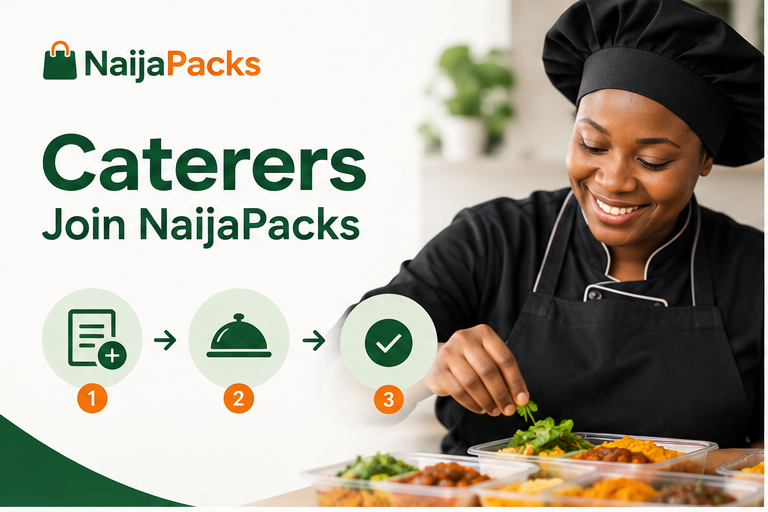
If people already ask for your jollof rice, your egusi, your small chops for their parties — Naijapacks is where that turns into real income. You cook what you already know how to cook, in the kitchen you already have, and customers in your city find you.
This guide walks through exactly what opening a caterer account involves, so there are no surprises before you start.
What it costs. Setting up your shop is free. Naijapacks takes a 10% platform fee only when you make a sale — nothing upfront, and nothing while you're getting your menu together.
What you'll need to open your account
A government-issued ID. A driver's license, passport, or state ID for the business owner.
Business registration. A DBA, LLC, or sole-proprietor registration in your name or your business's name.
A food service or cottage food permit. This varies by city and state — it might be a health department permit, a catering permit, a cottage-food registration, or home-kitchen approval. You'll tell us which one applies where you cook.
A food handler card, if your locality requires one. ServSafe or an equivalent food-safety certification. Not every city requires this, but if yours does, have it ready.
Liability insurance, if you carry it. A certificate of insurance is optional but worth having as your orders grow.
A W-9. Standard for US tax reporting once payouts start.
Your menu with allergen disclosures. A list of every dish you plan to sell, with the major allergens called out — peanut, tree nut, dairy, egg, soy, wheat, fish, shellfish.
Most caterers get through all of this in under half an hour. Once you submit, your shop is reviewed to make sure everything checks out, and then your kitchen is visible to customers searching for Nigerian food near you.
If people already know your food is good, this is just the part where they start paying you for it.